Better service requests
A practical homeowner checklist for describing a repair or maintenance job clearly so local service professionals can scope, price, and schedule it faster.
By Boots & Ladders · · 7 min read
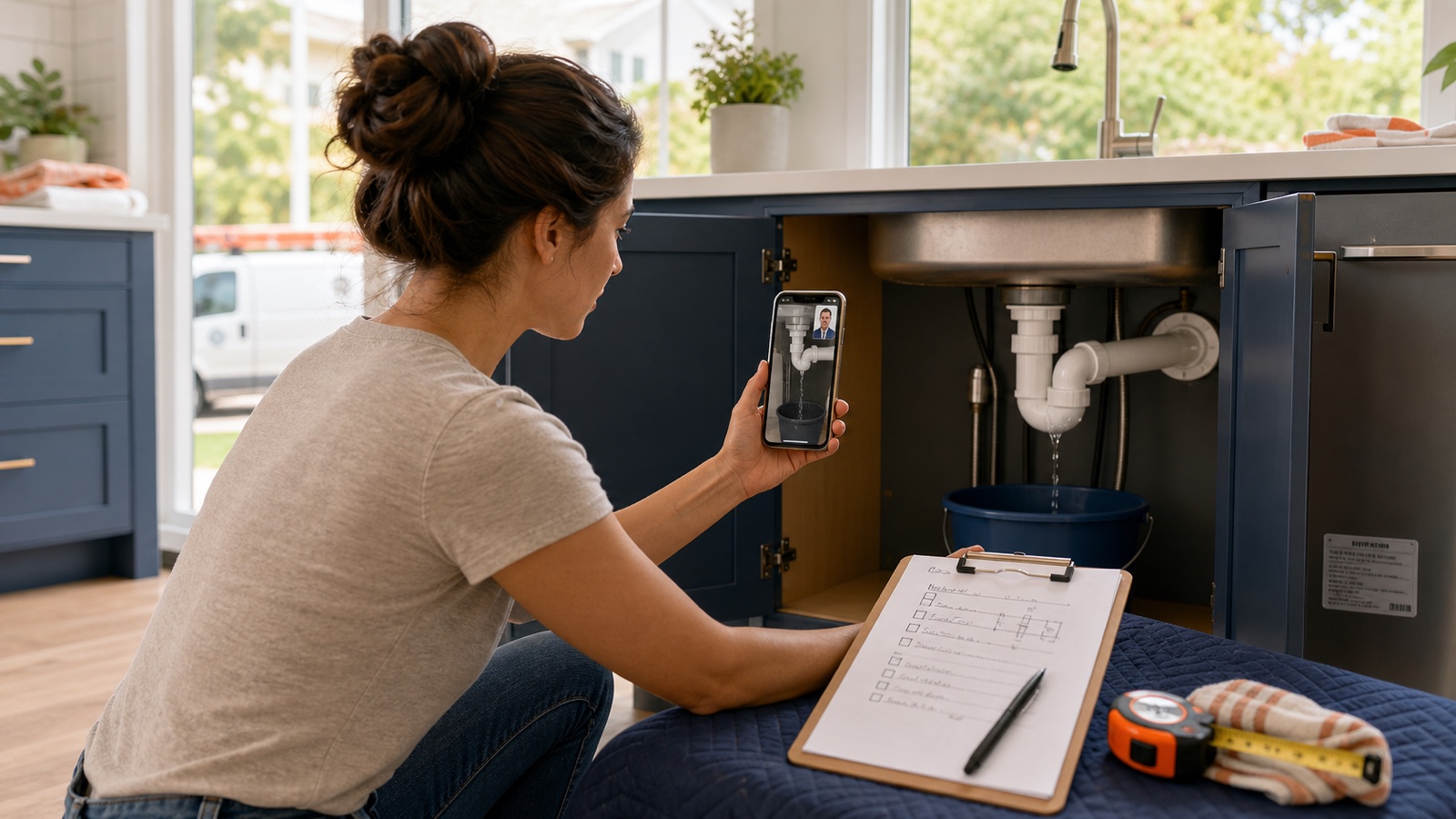
A useful request helps the right professional respond
“My sink is leaking” identifies a problem, but it does not give a plumber enough context to understand the likely scope. A stronger request explains where the leak appears, when it started, whether the water is still running, what fixture is involved, and what the homeowner wants to happen next.
The goal is not to diagnose the job yourself. It is to give a qualified local professional enough accurate information to decide whether the request matches the services they offer, what questions remain, and whether the next step should be a defined offer, a remote conversation, or an on-site assessment.
1. Start with the outcome you want
Describe the result in ordinary language: stop an active leak, replace a customer-supplied ceiling fan, restore power to an outlet, remove an overgrown shrub, repaint a bedroom, or inspect equipment that is making a new noise. State what is happening without presenting a guess as a confirmed diagnosis.
If you already chose a product or material, say so. If you want the professional to supply it, say that instead. This one distinction can change purchasing, pickup, warranty, installation, and scheduling requirements.
2. Identify the exact location and property context
Name the room, floor, indoor or outdoor location, and the part of the property involved. Include the service address or ZIP code through the platform’s appropriate private fields—not in a public post—so the professional can confirm the service area and travel requirements.
Property age can matter. If repair, renovation, or painting may disturb painted surfaces in a pre-1978 home, the EPA says federal lead-safe requirements can apply to paid contractors. Mention the construction year when known so the professional can ask the right compliance and safety questions.
3. Add photos that answer practical questions
Take one wide photo that shows where the problem sits in the room, one medium photo that shows access and nearby obstacles, and one close photo of the damaged part, connection, label, or finish. Use good light, keep the image in focus, and never enter an unsafe area just to get a better angle.
For equipment or appliances, add a clear photo of the manufacturer label when it is safe and accessible. Model and serial information can help a professional research compatibility, parts, age, or warranty questions before arriving. Avoid including mail, family photos, alarm codes, keys, or other private information in the frame.
4. Provide measurements—but label them as approximate
Useful measurements might include wall width and height, door opening, ceiling height, fixture dimensions, fence length, yard area, or the distance between the work and the nearest access point. Say how you measured and mark homeowner measurements as approximate unless a professional has verified them.
Measurements can improve early scoping, but they do not replace job-site verification when fit, code, structural conditions, hidden damage, or custom fabrication affects the work.
5. Explain urgency, access, and site conditions
Give a real timing window: active problem today, preferred completion this week, or planning for next month. Mention parking limits, stairs, gate access, pets, tenant coordination, occupied work areas, material-storage limits, or building rules that may affect the appointment.
Separate scheduling urgency from emergencies. If you smell gas and suspect a leak, the U.S. Consumer Product Safety Commission advises leaving the house immediately and calling the gas supplier or 911 from a safe location. Do not wait for an online marketplace response to handle an immediate danger.
6. Compare the request with the written scope
A detailed request improves the conversation, but it is not automatically the final agreement. Before larger repair or improvement work begins, compare your request with the professional’s offer, estimate, or contract. Confirm what is included, excluded, supplied, removed, protected, cleaned up, and warranted.
The Federal Trade Commission advises consumers to get multiple estimates for home-improvement work and says a written estimate should describe the work, materials, completion date, and price. Licensing, contract, permit, deposit, and cancellation rules vary by state and locality, so verify the requirements that apply where the property is located.
Copy this home-service request template
Service needed: [the result you want]. Location: [room, floor, indoor/outdoor area, city or ZIP]. What is happening: [observable symptoms and when they started]. Equipment or material: [type, brand, model, homeowner-supplied or pro-supplied]. Photos: [wide, access, close-up, label]. Approximate measurements: [dimensions and method]. Timing: [urgent, preferred dates, flexibility]. Access: [parking, stairs, gate, pets, tenant, building rules]. Known safety or property details: [construction year, shutoff status, visible damage]. Questions: [what is included, price basis, next step].
Boots & Ladders turns these details into a more useful connection between buyers and local professionals. Clear requests work best when they meet clear, productized service offers—with defined outcomes, transparent scope, and fewer rounds of back-and-forth before the work can begin.
Keep reading
Request a Service by Text Message
How Boots & Ladders prepares a simple work order message so buyers and sellers can manage the job directly by SMS.
· 4 min read
Real Photos Build Local Trust
Why real profile and work photos help local pros look more trustworthy than logos, cartoons, or generic AI images.
· 3 min read
How to Qualify Serious Home-Service Buyers Before Scheduling
How service professionals can reduce tire-kickers and protect schedule capacity using clear offers, structured intake, verification, and commitment signals.
· 6 min read
Productized Services, Ready to Go
How Boots & Ladders turns local services into simple, clear offers buyers can understand and request quickly.
· 4 min read
How Boots & Ladders Works: Instant Hiring with Service Offers
A concise explainer for buyers and sellers on how pre-generated service offers make local hiring faster and easier to understand.
· Video