Boots & Ladders Academy
A practical startup checklist for turning a hard-won idea into a tested offer, a paying customer, a repeatable operation, and a business ready for its next decision.
By Omar Kharbat · · 5 min read
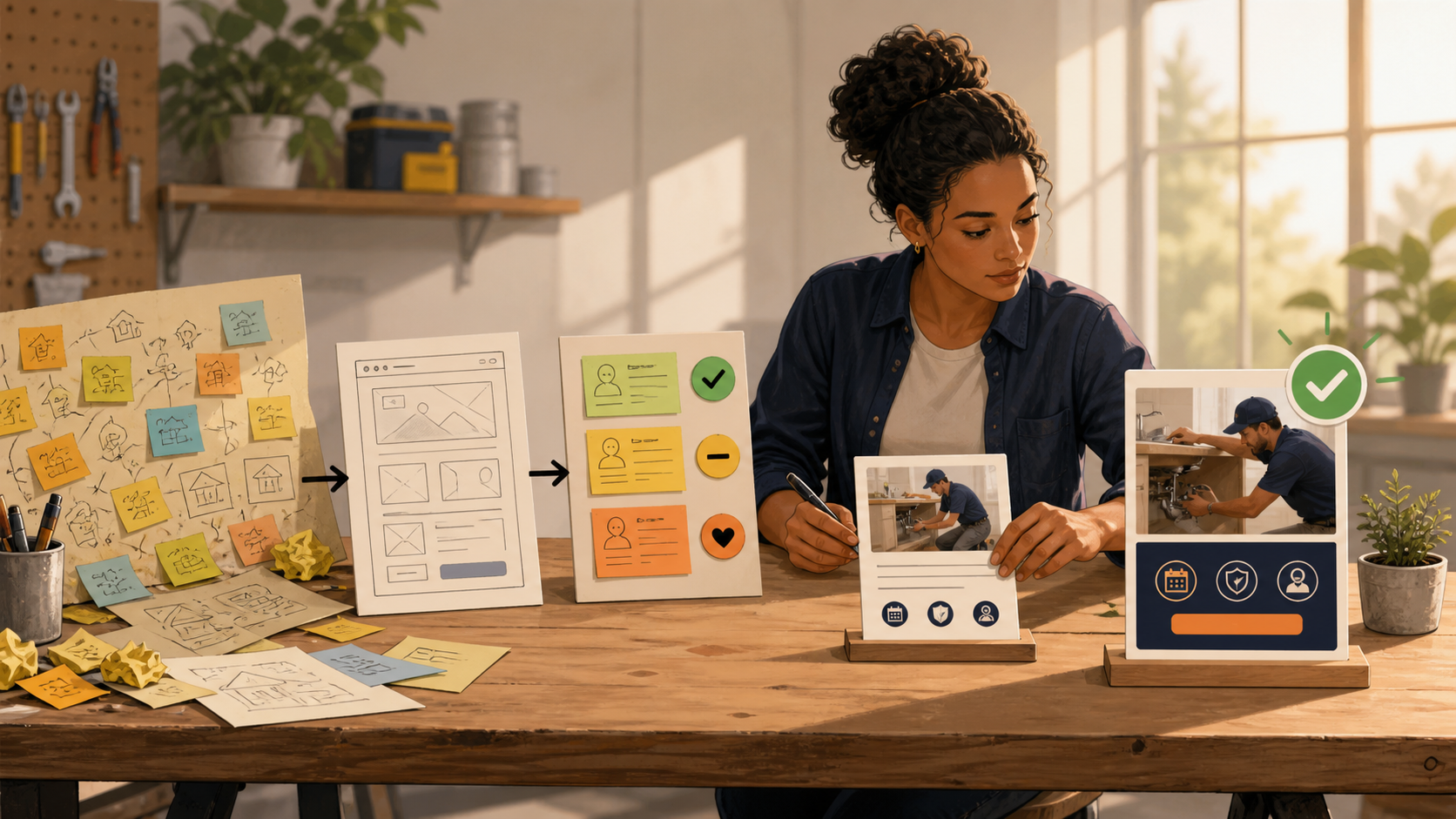
The idea is only the beginning
Founders often ask for help with logos, websites, funding, or advertising first. Those things matter, but they cannot rescue an unclear problem. A startup becomes easier to build when the founder can explain who is struggling, what they are trying to accomplish, and why the current options are not good enough.
Your first job is not to sound certain. It is to turn your idea into a hypothesis that can be tested with real people, real conversations, and a small useful offer.
1. Prove the problem before polishing the solution
Talk to people who recently experienced the problem. Ask what happened last time, what they tried, what was difficult, what it cost, and what they still dislike. Listen for repeated behavior and urgency rather than compliments about your idea.
For a service startup, the evidence may be a homeowner who needs a repair, a property manager who cannot find dependable capacity, or a skilled pro losing time to unclear requests.
2. Identify the customer—and the person who can approve the purchase
The user, buyer, budget owner, and procurement gatekeeper are not always the same person. Map everyone who can delay, approve, reject, or repeat the purchase. Your startup needs a buying path: trigger, urgency, budget, approval, service area, and the proof required before someone says yes.
3. Build the smallest useful version of the service
The first version does not need every feature. It needs a clear outcome a real customer can experience: a defined inspection, fixed-scope installation, maintenance package, or manual concierge workflow behind a simple booking form.
Early manual work teaches which questions, handoffs, materials, and exceptions should eventually become software or standard operating procedures.
4. Find first customers before designing a massive launch
Choose a narrow first market and reach people directly. Offer the smallest useful version, observe hesitation, and ask what would make the next purchase easier. A few paid customers can teach more than a large audience that only clicks.
For local services, the first launch may happen through a marketplace profile, referrals, a neighborhood network, a partner, or direct conversations. The channel is a test, not a permanent identity.
5. Make the message easy to repeat
A strong position answers four questions quickly: who is this for, what problem does it solve, what result does it create, and why is this approach different? If a customer cannot explain your business to a friend, the message is not finished.
Use plain language. Buyers should not need to become plumbers, electricians, marketers, or software engineers to understand whether your offer fits.
6. Price for survival, not applause
Pricing must account for delivery time, materials, travel, overhead, payment delays, rework, taxes, and the margin needed to keep operating. Show what the price includes, what it excludes, what could change scope, and what happens next. That lets you compete on value instead of panic-discounting.
7. Choose channels after the offer is clear
Start with one or two owned channels, one relationship channel, and one measured experiment. Complete the profile, publish useful answers, show real work, and make the next step obvious. More traffic cannot fix a confusing offer.
8. Treat fundraising as a tool, not a milestone
Before raising money, define what the capital will unlock: a tested product, repeatable sales motion, additional capacity, or measurable expansion. State the amount, use of funds, milestones, risks, and evidence that makes the plan credible.
Some service businesses are better built through customer revenue and disciplined reinvestment. If you raise, get qualified legal and financial advice.
9. Turn delivery into a system customers can trust
Document intake, scheduling, scope, checklists, photos, payment, follow-up, and exceptions. Make the work order match what the customer bought. Clear expectations and repeatable handoffs also reduce employee stress and help retain good people.
10. Measure proof instead of activity
Track conversations, offers, bookings, completion, gross margin, callbacks, repeat work, referrals, utilization, and cash runway. A large follower count can be encouraging, but a returning customer who refers someone is stronger evidence that the offer is becoming useful.
11. Scale only what you can repeat
Growth should follow a repeatable customer outcome. Before adding staff, territories, services, or paid acquisition, prove that the current offer can be sold, delivered, and supported without the founder rescuing every step.
The startup help that matters most
The best help is a disciplined way to learn faster: talk to customers, test a useful offer, charge honestly, document what works, and measure what happens next.
Boots & Ladders brings that logic to skilled service businesses. Make the problem easier to explain, the service easier to buy, and the delivery easier to repeat. That is how a founder turns experience into a business customers can trust.
Boots & Ladders workshop research with YC Startup School comparison
Keep reading
From Idea to MVP: A Practical Guide for Founders
A practical founder guide to validating the problem, testing the message, launching a focused MVP, and learning directly from early users.
· 4 min read
How to Choose a Profitable Niche for Your Service Business
A five-part method for choosing a service-business niche based on ability, local demand, repeatability, economics, and a focused real-world test.
· 6 min read
Productized Services, Ready to Go
How Boots & Ladders turns local services into simple, clear offers buyers can understand and request quickly.
· 4 min read
Before You Lower the Price, Make Sure the Customer Understands the Value
When a service buyer hesitates, cutting the price is rarely the first answer. Clarify the outcome, scope, proof, and process so customers can understand what the work is worth before you discount it.
· 6 min read
How to Grow Your Service Business with Cost-Plus Pricing
A Boots & Ladders pricing lesson for service pros who want clearer margins, better customer expectations, and more profitable jobs.
· Video